
In an era of mass surveillance and regional restrictions, VPN has become a household name. But what is it exactly? A magic invisibility cloak for the internet, or just a redirected pipe for your data?
What is a VPN?
A Virtual Private Network (VPN) creates a secure, encrypted connection between your device and a remote server operated by a VPN provider. Your data travels through an encrypted 'tunnel', making it unreadable to your Internet Service Provider (ISP) and hackers on public Wi-Fi.
The Pros of Using a VPN
- IP Masking: Websites see the IP address of the VPN server, not your home address. This helps prevent tracking based on your location.
- Public Wi-Fi Protection: When using Wi-Fi in a cafe or airport, a VPN prevents others on the same network from 'sniffing' your traffic.
- Bypassing Censorship: It allows users in restricted regions to access the global internet freely.
The Cons & Limitations
VPNs are not perfect. It is crucial to understand what they cannot do:
- Speed Reduction: Encryption and the extra distance data travels to the server can slow down your connection.
- The 'Trust' Shift: You stop trusting your ISP, but you start trusting the VPN provider. They can technically see your traffic if they don't have a strict 'No-Logs' policy.
- Not a Magic Bullet: A VPN does not protect you from malware, phishing, or tracking via browser cookies.
Comparison of VPN Protocols
| Protocol | Security | Speed |
|---|---|---|
| OpenVPN | Very High | Average |
| WireGuard | High | Excellent |
| IKEv2/IPsec | High | Fast |
The Danger of 'Free' VPNs
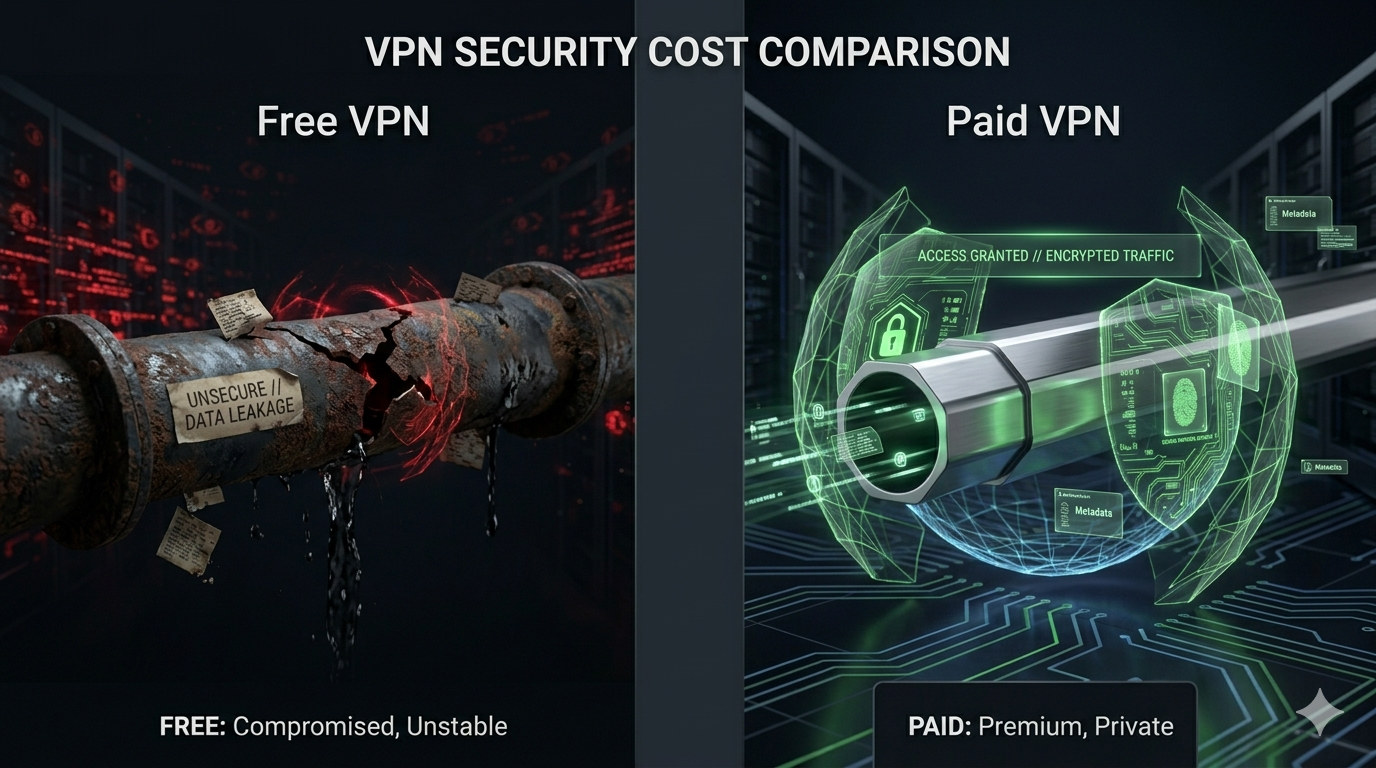
As the saying goes: 'If you aren't paying for the product, you ARE the product.' Free VPNs often sell your browsing data to advertisers or, worse, contain malware. According to Wikipedia, the security of a VPN depends heavily on the provider's infrastructure and legal jurisdiction.
Conclusion
A VPN is a vital tool for privacy on public networks and avoiding basic tracking. However, it should be part of a broader security strategy that includes strong passwords, MFA, and client-side encryption. Choose a provider with a proven 'No-Logs' audit to ensure your data stays private.